

Meringue Template
Jump to Recipe
Prepare a proper meringue for baking perfect macarons using the right kitchen tools and the correct whipping speed at every step.
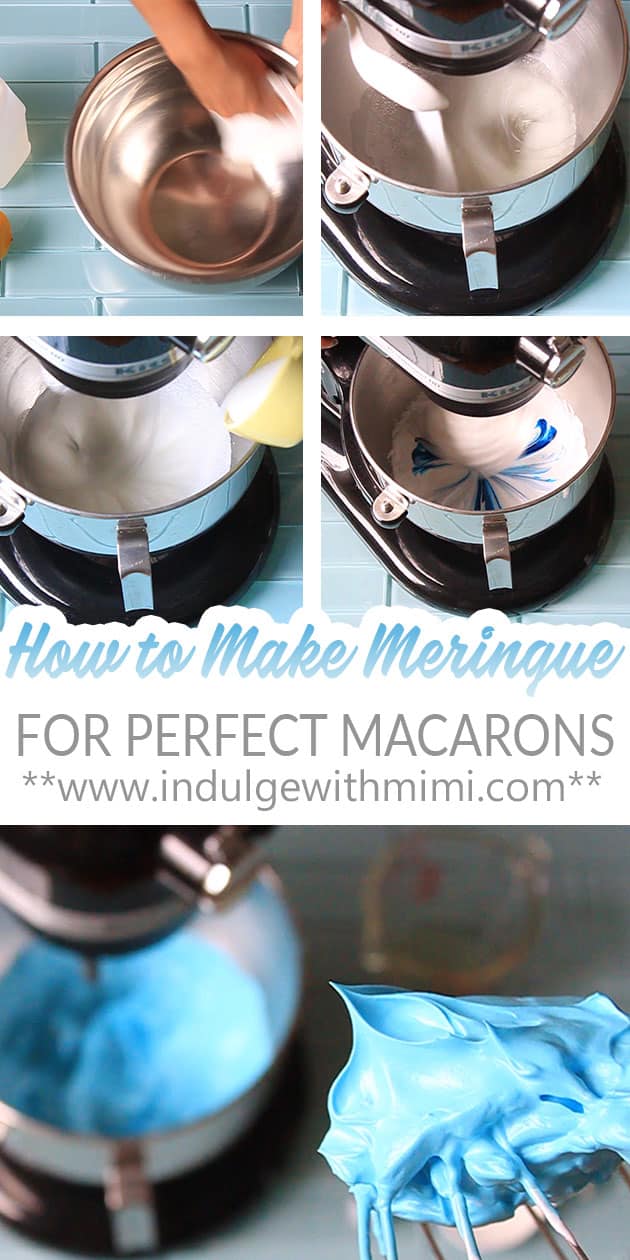
The Perfect Foundation for Macarons
By popular request, here's the guide on how to make perfect meringue for macarons with a dedicated video and instructions. The meringue is perhaps the most important foundation for perfect macarons so it's important to make it properly. I'd venture to say that most macaron problems derive from a poorly prepared meringue. Make sure to start with aged egg whites and follow the step-by-step instructions outlined. I also made a video which will give you a visual idea of the key markers to look for when preparing meringue for macarons.
Step-By-Step
Start by wiping down mixing bowls and utensils with lemon juice or vinegar to remove oils.
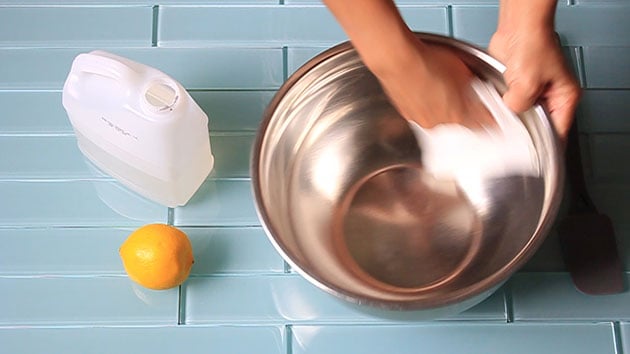
Use aged egg whites for making meringue for macarons. Bring it back to room temperature first. Whip the egg whites on low until foamy. At this point, the bubbles are bigger and clear.
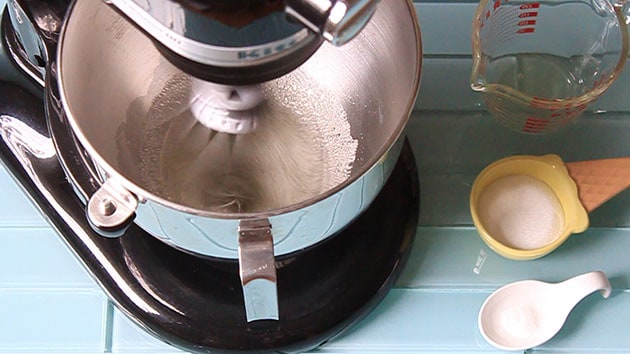
Add the cream of tartar, increase speed to medium.
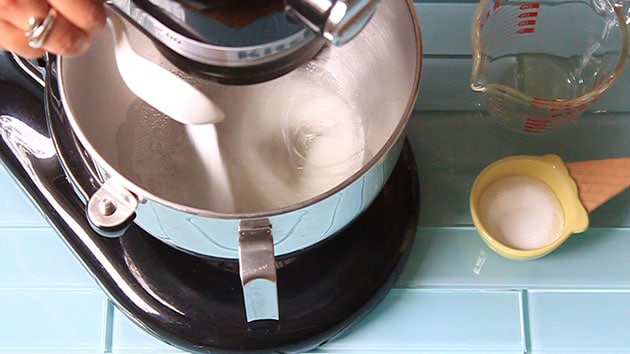
Once the bubbles have tightened up in size, the egg whites have become opaque and the whisk has started to leave tracks in the egg whites, add the sugar gradually.
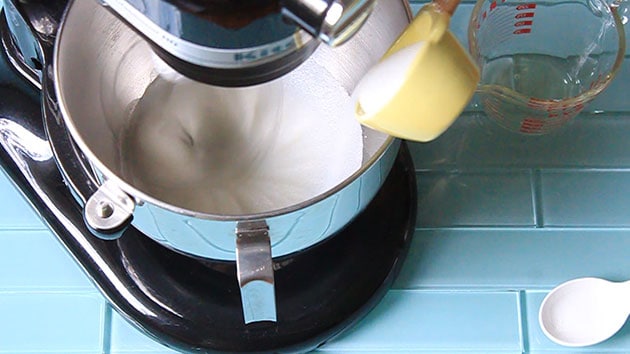
Once the meringue is at the soft peaks stage, add the gel colour. Soft peaks is characterized by a pointed beak in the meringue that droops back on itself. Increase speed to medium high.
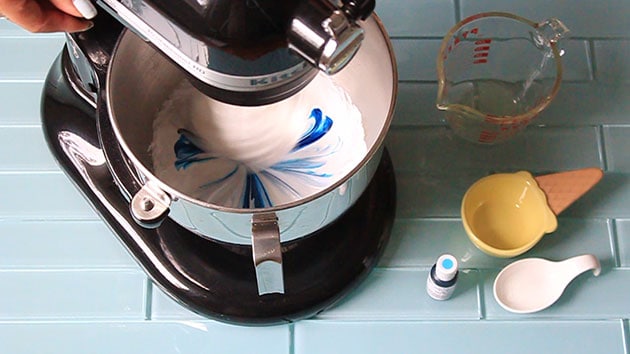
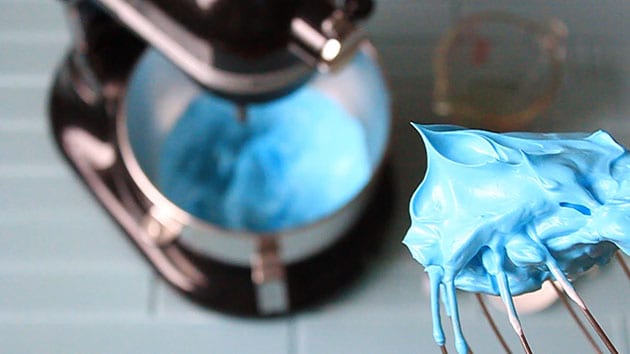
Beat until stiff peaks are reached. Stiff Peaks is characterized by points in the meringue that stand vertically without drooping. Use immediately.
Tips for Making Perfect Meringue:
- Do not use plastic bowls to whip the meringue since they have a porous surface and holds onto oils.
- Wipe down tools and bowls with lemon juice or vinegar to remove any oils.
- Always start whipping egg whites on low speed. This will allow the air bubbles created to have a more stable structure.
- Yes, a meringue can become over beaten. Once it starts to separate into chunks, you know you've gone too far. It cannot be used anymore.
- Another test for macaron stiffness is to flip the bowl upside down, if the meringue doesn't slip, it's ready. This might not work so well with glass bowls since it slips easily on glass. Use stainless steel ones like these if possible.
- Do not use aluminum bowls for beating meringue since some of it may come out during the beating process.
- Cream of tartar is added to stabilize the meringue. This can be substituted with another acid like lemon juice or vinegar in double the amount. Cream of tartar is usually found next to the spices in the baking aisle of most grocery stores.
- Caster sugar is also known as berry sugar or extra fine granulated sugar. It melts easily into the meringue making it ideal for whipping meringue desserts. It is usually found right next to the granulated sugar in the baking aisle. It can be substituted with regular sugar granulated sugar but castor sugar produces more desirable results.
- You can get just as much flavour into the macaron shells simply by osmosis during the maturation phase with the filling. There is usually no need to add liquid extracts into the meringue.
- Previously frozen egg whites cannot be used to make meringues since they tend to be watery once thawed. They can be used in other recipes which do not rely on it to be the sole leavening agent.
- Never add liquid coloring into a meringue. Always use GEL coloring. This is a great brand that doesn't fade while baking.
This post was originally published on March 18, 2017
Prep Time 15 minutes
Total Time 15 minutes
Ingredients
Meringue
- Aged egg whites
- Castor sugar (Note 1)
- Cream of tartar (Note 2)
- Lemon juice or vinegar
- Gel food colour
Tools
- Stand mixer with balloon whisk attached or handheld mixer
- Non-plastic mixing bowl
- Spatula
Instructions
- Start by using aged egg whites (read this post on how to age egg whites for macarons)
- Wipe down non-plastic mixing bowls with lemon juice or vinegar to reduce oils.
- Bring whites back to room temperature before whipping. You can bring egg whites to room temperature more quickly by placing the vessel holding the egg whites into a bowl filled with warm water.
- Throughout the process, whip the egg whites while increasing the speed gradually. Start on low then build up from there.
- Whip whites onlow until foamy
- Add cream of tartar or lemon juice
- Whip onmedium until whisk leave marks in the whites
- Add sugar a little at a time. Wait until it dissolves into the whites before adding next portion.
- Before it gets stiff, while its at a soft peak stage, add GEL color. Soft peaks is characterized by egg whites that have become white and holds a soft droopy beak.
- Whip onhigh until stiff and whites clump in the whisk. Stiff peaks is characterized by a pointed beak that stands vertically and doesn't droop on itself.
- Use immediately
Notes
1. Castor sugar is also known as berry sugar or extra fine granulated sugar. It dissolves easily into egg whites making it ideal for meringue use. Granulated sugar can be used as a substitute.
2. Another acid like lemon juice or vinegar can be used as a substitute.
Reader Interactions
Source: https://www.indulgewithmimi.com/how-to-make-perfect-meringue-for-macarons/


0 Komentar